
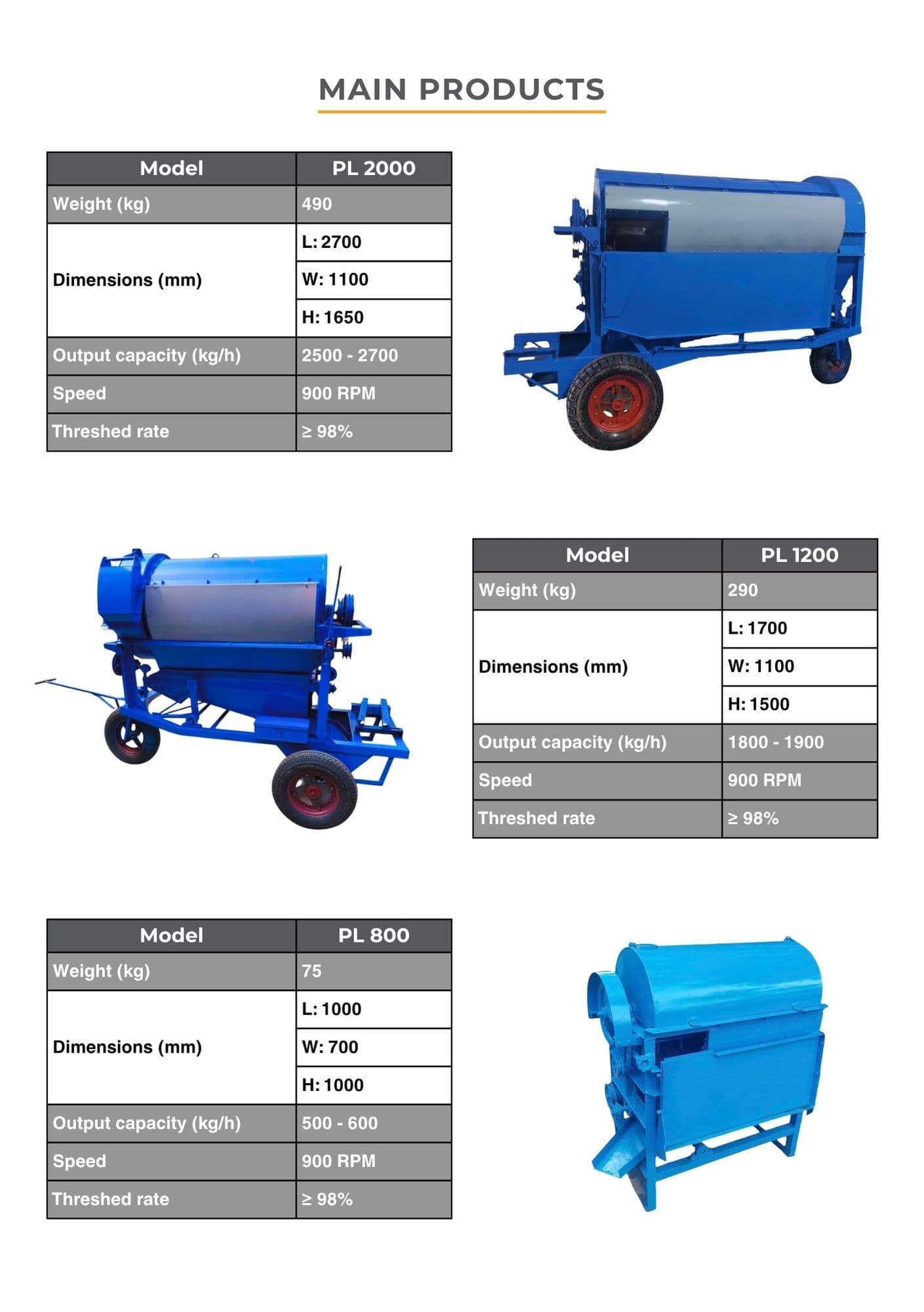
A paddy thresher running at 900 RPM handles enormous loads during harvest season. These five habits prevent the most common failures.
1. Clean the Threshing Drum After Each Session
Rice straw and chaff pack into the drum gaps. If left overnight, moisture causes rust and imbalance. Use compressed air or a stiff brush to clear all channels after each day's work.
2. Check Belt Tension Weekly
Loose belts cause slippage and reduce RPM below the optimal 900. A belt should deflect no more than 10–15mm under firm thumb pressure. Replace belts that show cracking or fraying — they are cheap insurance against downtime.
3. Lubricate Bearings Every 40 Operating Hours
The main shaft bearings take the highest load. Use a grease nipple gun with general-purpose bearing grease. Over-greasing is just as harmful as under-greasing — two pumps per bearing every 40 hours is sufficient for the PL1200 and PL2000.
4. Inspect the Concave Screen Before Harvest
The perforated concave screen is what separates grain from straw. Bent or clogged holes reduce the threshed rate below the ≥98% specification. Straighten bent sections with a flat punch or replace the screen panel — it is a standard spare part.
5. Store Off-Season with Drum Rotating Freely
Before long-term storage, clean thoroughly, coat exposed metal with a light oil film, and rotate the drum by hand to confirm it spins without resistance. Cover the machine to keep out moisture and rodents.
Following these steps, the PL800, PL1200, and PL2000 will maintain rated performance across many harvest seasons.